
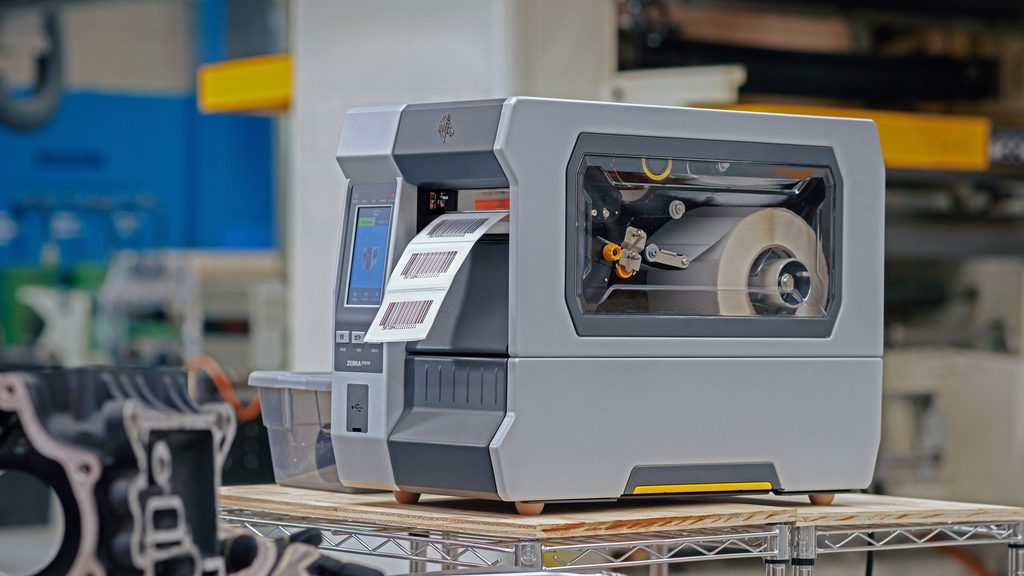
Accurate labelling is essential for businesses that need to track products, inventory, shipments, assets and information efficiently. From warehouses and retail stores to healthcare facilities and manufacturing environments, barcode printers play an important role in keeping operations organised and productive.
Unlike standard office printers, barcode printers are specifically designed to produce high-quality barcode labels quickly and consistently. They can print everything from product labels and shipping labels to asset tags, receipts and identification labels.
With the right barcode printer, businesses can reduce manual data entry, improve inventory accuracy and create a more streamlined workflow.
What Are Barcode Printers?
Barcode printers are specialised printers designed to produce machine-readable barcodes and labels. Most modern models use thermal printing technology, which provides fast, reliable printing without requiring traditional ink cartridges.
There are two main types of thermal barcode printing:
Direct Thermal Printing
Direct thermal printers create images by applying heat directly to heat-sensitive label material. They do not require ribbons, making them a simple and cost-effective option for applications such as shipping labels, receipts and temporary product labels.
Thermal Transfer Printing
Thermal transfer printers use a ribbon to transfer ink onto the label material. This produces highly durable labels that are better suited to applications where labels need to withstand heat, moisture, chemicals, abrasion or long-term handling.
For demanding industrial and commercial applications, thermal transfer barcode printers are often the preferred choice.
Why Invest in Barcode Printers?
Businesses handle large amounts of information every day. Manually writing or printing labels using conventional printers can be slow, inconsistent and prone to errors.
Dedicated barcode printers offer several advantages:
- Fast printing: Produce large quantities of labels quickly.
- Improved accuracy: Consistent barcode quality helps scanners read labels correctly.
- Lower operating costs: Thermal printing can reduce consumable and maintenance requirements.
- Compact designs: Desktop models are suitable for offices, retail counters and workstations.
- Industrial durability: Heavy-duty models are designed for demanding environments.
- Easy integration: Many printers can connect with warehouse, inventory, ERP and point-of-sale systems.
- Professional labelling: Consistent labels help businesses maintain a professional appearance.
Zebra Printers: A Leading Choice for Barcode Printing
When businesses are looking for dependable barcode printers, Zebra is one of the most recognised names in the industry.
Zebra printers are widely used across retail, logistics, warehousing, healthcare, manufacturing and transportation. The range includes compact desktop printers, mobile printers and high-performance industrial models, allowing businesses to select a printer based on their specific workload.
Zebra Desktop Barcode Printers
Zebra desktop models are ideal for businesses that need reliable barcode printing without requiring a large industrial printer.
They can be used for:
- Product labels
- Retail labels
- Inventory labels
- Shipping labels
- Asset tags
- Small-batch printing
- Office and back-office applications
Models such as the Zebra ZD421 and ZD621 provide compact solutions for businesses that need dependable everyday barcode printing.
Zebra Industrial Barcode Printers
For warehouses, manufacturing facilities and distribution centres, industrial barcode printers are designed to handle demanding workloads.
Industrial Zebra printers are built for environments where businesses may need to print thousands of labels every day. Models such as the Zebra ZT231 and ZT610 provide robust printing solutions for high-volume applications.
These printers can support demanding workflows such as:
- Warehouse inventory management
- Pallet and carton labelling
- Product identification
- Manufacturing processes
- Shipping and logistics
- Asset tracking
- Compliance labelling
Choosing the Right Barcode Printer
There is no single barcode printer that is perfect for every business. The right model depends on your application, printing volume, label material and working environment.
Consider the following factors before purchasing.
1. Printing Volume
Think about how many labels your business prints each day.
For occasional or low-volume printing, a compact desktop printer may be sufficient. Businesses printing thousands of labels daily should consider a higher-performance or industrial barcode printer.
2. Label Size
The size of your labels will influence which printer is most suitable. Consider the label width, length and the amount of information that needs to be printed.
3. Print Resolution
Standard applications may work well with 203 dpi printing. However, applications involving small text, graphics or high-density barcodes may benefit from higher-resolution printing such as 300 or 600 dpi.
4. Direct Thermal or Thermal Transfer
Consider how long the label needs to last.
For temporary labels, direct thermal printing can be an excellent choice. For durable product, asset or industrial labels, thermal transfer technology can provide better long-term resistance.
5. Connectivity
Modern barcode printers can offer a range of connectivity options, including USB, Ethernet, Wi-Fi and Bluetooth.
Choosing the right connectivity options makes it easier to integrate the printer with your existing business systems.
6. Operating Environment
A printer used in a quiet office has different requirements from one operating on a busy warehouse floor.
For harsh environments, look for a rugged industrial barcode printer designed to withstand continuous operation and demanding conditions.
Barcode Printers for Different Industries
Retail
Retailers use barcode printers for product labels, shelf labels, price tags, inventory management and returns.
Fast and accurate barcode printing can help staff identify products and update stock efficiently.
Warehousing and Logistics
Warehouses depend heavily on barcode technology for receiving, picking, packing and shipping.
Barcode printers allow businesses to produce labels for cartons, pallets, products and shipments while maintaining accurate tracking throughout the supply chain.
Manufacturing
Manufacturers use barcode printers to identify raw materials, components, finished products and work-in-progress items.
Durable thermal transfer labels can also help ensure identification remains readable throughout the production process.
Healthcare
Healthcare organisations use barcode labels for patient identification, specimen tracking, medication management and asset identification.
Reliable barcode printing is particularly important where accurate identification is essential.
Transportation
Shipping companies and logistics providers use barcode printers to produce tracking and shipping labels quickly.
Mobile and desktop barcode printers can help streamline labelling at different points throughout the distribution process.
How to Get the Most from Your Barcode Printer
Choosing the right printer is only the first step. Proper setup and maintenance can help maximise its performance.
Use the correct label and ribbon combination for your application, keep the printhead clean and ensure the printer is correctly calibrated.
It is also important to use good-quality barcode labels. Poor-quality labels can result in unreadable barcodes, scanning problems and unnecessary waste.
Regular maintenance and replacing consumables at the appropriate time can also help extend the working life of your printer.
Find the Right Barcode Printer for Your Business
Whether you operate a small retail business, a growing warehouse or a large manufacturing facility, the right barcode printers can make your labelling processes faster, more accurate and more efficient.
From compact desktop solutions to rugged industrial systems, Zebra printers offer a wide selection of options for different printing requirements and environments.
Before choosing a printer, consider your printing volume, label size, print resolution, media type, connectivity and operating environment. Selecting a printer based on your actual requirements can help you achieve better reliability and lower long-term operating costs.
Looking for the right barcode printer? Explore Zebra and other professional barcode printing solutions to find a printer that fits your business requirements.