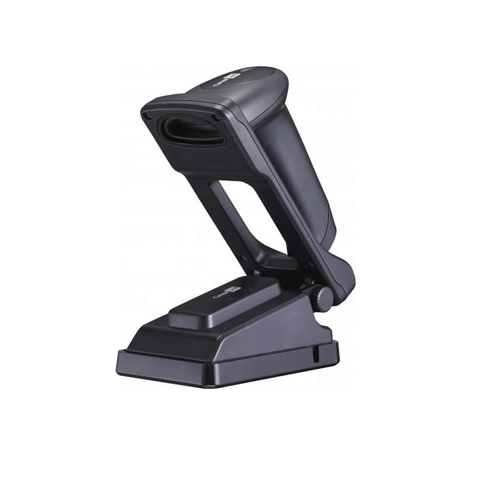
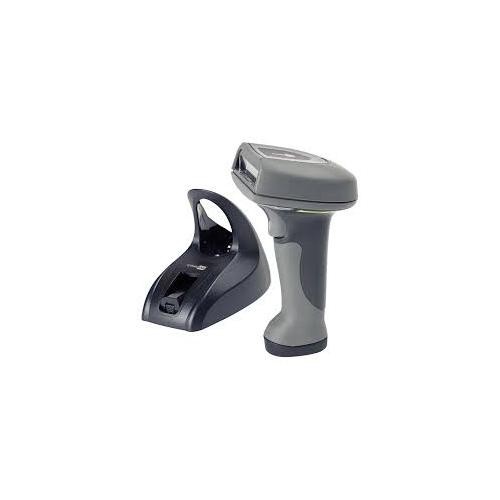
Cordless scanners are devices that can capture and transmit data without the need for a physical cable connection. These scanners provide increased mobility and flexibility in various applications. Here are some key features and applications of cordless scanners:
Features of Cordless Scanners:
- Wireless Connectivity:
- Cordless scanners use wireless technologies such as Bluetooth, Wi-Fi, or RF (Radio Frequency) to communicate with a host device, such as a computer or a mobile terminal.
- Mobility:
- The absence of cables allows users to move freely and scan items without being restricted by the length of a cord.
- Ideal for applications where users need to move around a space, such as retail environments, warehouses, or manufacturing facilities.
- Portability:
- Cordless scanners are often compact and lightweight, making them easy to carry and use in various settings.
- Portable cordless scanners are commonly used in field service, inventory management, and retail.
- Versatility:
- Cordless scanners are available in various form factors, including handheld scanners, mobile computer terminals with integrated scanners, and wearable scanners.
- They can be used for different types of barcodes, QR codes, and other data capture applications.
- Real-time Data Capture:
- The wireless connectivity allows real-time data transmission, enabling prompt updates to databases or inventory systems.
- This is crucial in scenarios where up-to-date information is essential, such as retail sales or inventory management.
- Batch Mode:
- Some cordless scanners support batch mode, where data is stored in the scanner and then transmitted when a connection is established.
- This feature is useful in situations where wireless connectivity may be temporarily unavailable.
- Long Battery Life:
- Cordless scanners are designed to have sufficient battery life to last through a full work shift or longer, depending on usage.
- Battery life considerations are important for ensuring continuous operation without frequent recharging.
Applications of Cordless Scanners:
- Retail and Point-of-Sale (POS):
- Cordles scanners are commonly used in retail environments for scanning product barcodes during the checkout process.
- Inventory Management:
- Ideal for inventory tracking in warehouses or retail stores, allowing for efficient and accurate data capture without the constraint of cables.
- Field Service:
- Cordles scanners are used in field service applications where technicians need to scan equipment, parts, or assets on-site.
- Healthcare:
- In healthcare settings, cordless scanners can be used for patient identification, medication tracking, and inventory management.
- Manufacturing and Logistics:
- Cordles scanners are employed in manufacturing and logistics for tracking items, managing inventory, and improving overall workflow efficiency.
- Event Ticketing and Access Control:
- Cordles scanners are utilized in events for quick and convenient ticket scanning and access control.
- Library and Asset Tracking:
- Libraries and organizations use cordless scanners for cataloging books and tracking assets efficiently.
Cordless scanners offer a convenient solution for applications that require mobility, flexibility, and real-time data capture. The choice of wireless technology (Bluetooth, Wi-Fi, RF) depends on the specific requirements of the application and the desired range of connectivity.